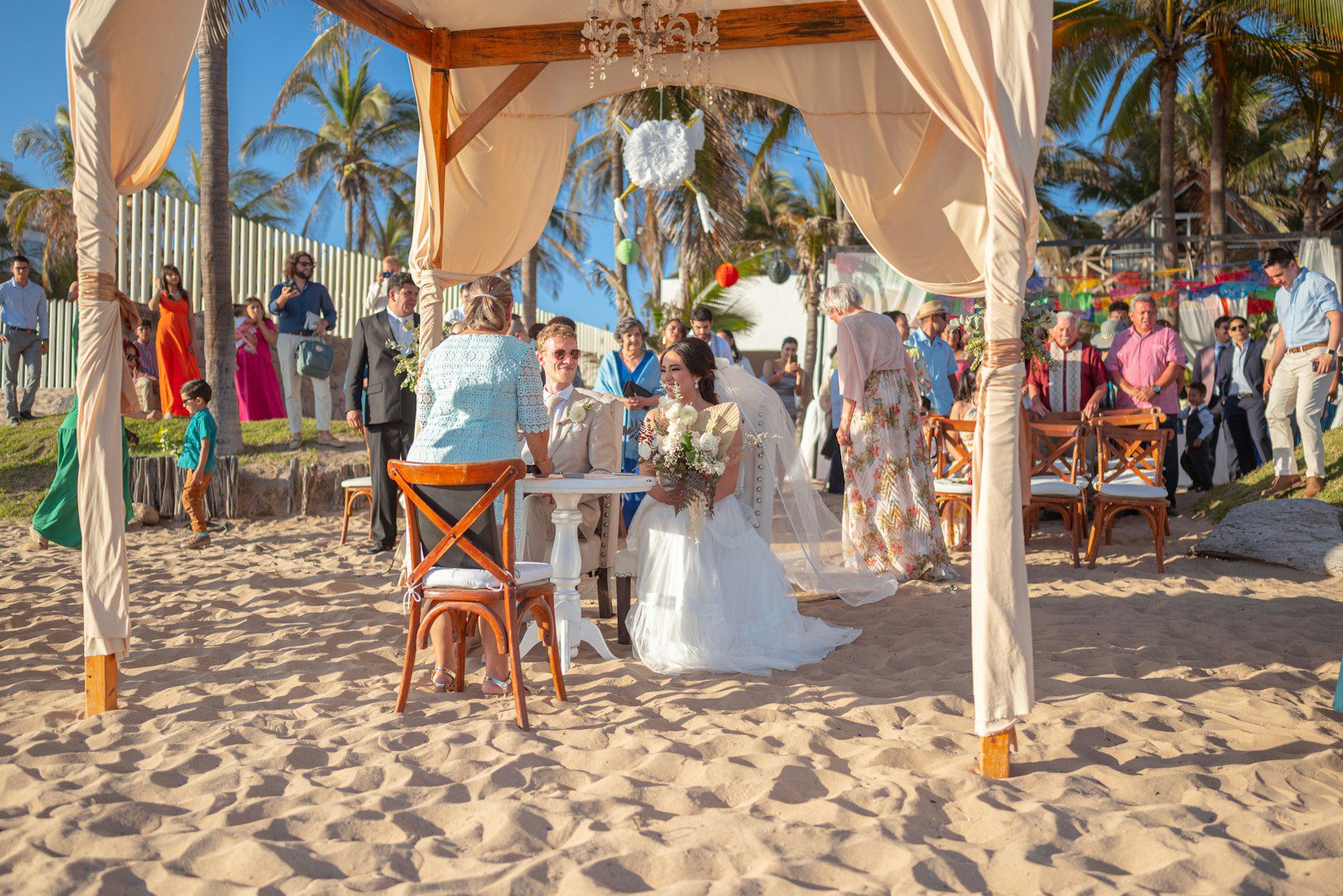
The Rise of the ‘Wedding Weekend’ & What It Costs You: A Guest’s Financial Survival Guide
Last Updated: January 2026
The invitation arrives: “Join us for a celebration weekend! Friday welcome drinks, Saturday ceremony and reception, Sunday farewell brunch.”
Your heart sinks as you mentally calculate: Three days. Multiple outfits. Hotel costs. Meals. Time off work.
Welcome to the fastest-growing wedding trend of 2026: the Wedding Weekend. And if you’re a guest, it’s about to cost you significantly more than you budgeted.
The Numbers Don’t Lie: Wedding Weekends Are Everywhere
According to 2026 wedding industry data, 1 in 5 couples now host multi-day “wedding weekends” instead of single-day celebrations. For destination weddings, that number jumps to nearly 60%.
This isn’t a passing fad. Wedding weekends represent a fundamental shift in how couples conceptualize their celebrations—from a single event to an immersive experience.
Why Couples Love Wedding Weekends
From the couple’s perspective, wedding weekends solve real problems:
More quality time with guests: “We have guests traveling from across the country. A single 4-hour reception felt insufficient to actually spend time with everyone.”
Reduced timeline pressure: “Spreading events across three days meant our ceremony didn’t feel rushed. We had time to breathe.”
Showcasing personality through variety: “Friday was casual and fun, Saturday was elegant, Sunday was relaxed. Each day reflected different parts of who we are.”
Justifying travel for distance guests: “If people are flying across the country, we wanted to make their trip worthwhile with a full weekend experience.”
These are genuine, thoughtful motivations. Couples aren’t trying to burden guests—they’re attempting to create meaningful celebrations.
Unfortunately, good intentions don’t reduce costs for attendees.
The True Cost of Attending a Wedding Weekend
Let’s break down real numbers. We’ll examine what a guest actually spends attending a wedding weekend versus a traditional single-day celebration.
Scenario 1: Traditional Single-Day Wedding (Saturday)
Travel:
- Roundtrip flight (medium distance): $300-450
- Airport parking/transportation: $40-80
- Subtotal: $340-530
Accommodation:
- Friday night hotel (1 night): $150-250
- Subtotal: $150-250
Attire:
- Wedding outfit (if purchasing new): $100-300
- Shoes and accessories: $50-100
- Subtotal: $150-400
Gift:
- Typical wedding gift: $100-150
- Subtotal: $100-150
Incidentals:
- Meals not covered: $30-60
- Tips (valet, hotel staff): $20-40
- Subtotal: $50-100
Time off work:
- Friday off (unpaid for hourly workers): $0-200
- Subtotal: $0-200
TOTAL TRADITIONAL WEDDING: $790-1,630
Scenario 2: Three-Day Wedding Weekend
Travel:
- Same costs as traditional wedding: $340-530
Accommodation:
- Thursday arrival (early arrivals): $150-250
- Friday night: $150-250
- Saturday night: $150-250
- Sunday departure (checkout): Covered in Saturday night
- Subtotal: $450-750 (vs. $150-250 traditional)
- Difference: +$300-500
Attire:
- Friday welcome party outfit (semi-casual): $75-200
- Saturday ceremony outfit (formal): $100-300
- Sunday brunch outfit (casual): $60-150
- Multiple pairs of shoes: $100-200
- Accessories for multiple looks: $50-150
- Subtotal: $385-1,000 (vs. $150-400 traditional)
- Difference: +$235-600
Food and beverages:
- Thursday dinner (own meal): $30-60
- Friday lunch: $15-30
- Friday afternoon (own snacks/coffee): $10-20
- Saturday breakfast: $15-25
- Saturday pre-ceremony lunch: $20-40
- Sunday any additional meals: $20-40
- Additional drinks at venues: $40-80
- Subtotal: $150-295 (vs. $50-100 traditional)
- Difference: +$100-195
Gift:
- Wedding gift (same expectation): $100-150
Incidentals:
- Multiple valet/parking fees: $40-80
- Tips across three days: $40-70
- Pet sitting/childcare for extended time: $100-300
- Subtotal: $180-450 (vs. $50-100 traditional)
- Difference: +$130-350
Time off work:
- Thursday off (if arriving early): $0-200
- Friday off: $0-200
- Monday off (recovery/travel): $0-200
- Subtotal: $0-600 (vs. $0-200 traditional)
- Difference: +$0-400
TOTAL WEDDING WEEKEND: $1,605-3,775 vs. Traditional Wedding: $790-1,630 ADDITIONAL COST: $815-2,145
That’s double to triple the cost of attending a traditional wedding—and this is for a domestic wedding weekend. Destination weddings multiply these figures further.
The Hidden Costs Nobody Mentions
Beyond the obvious expenses, wedding weekends create financial pressure through less visible channels:
Wardrobe Multiplication
One bride shared: “I attended a wedding weekend where I needed:
- Friday welcome drinks: sundress and sandals
- Beach bonfire: casual jeans and cover-up
- Saturday ceremony: formal floor-length gown
- Saturday reception (same): formal continued
- Sunday brunch: cute casual outfit
That’s essentially four different outfits. I spent $600 on clothes alone.”
For guests on a budget, outfit repetition feels awkward. Social media documentation of every event compounds pressure to vary looks.
The Attendance Obligation Blur
When do you have to attend?
Traditional wedding: Clear expectation—attend ceremony and reception.
Wedding weekend: Murkier expectations.
- Is Friday welcome event mandatory or optional?
- Can you skip Sunday brunch without offending?
- What if you only attend Saturday?
One guest described her dilemma: “The invitation said ‘Friday welcome drinks (optional)’ but when I arrived Saturday morning, people asked where I’d been Friday. It felt like I’d committed a faux pas by taking ‘optional’ literally.”
Career Impact
Taking Thursday-Monday off for a wedding (4 days) versus taking Friday off (1 day) has real professional implications:
For salaried employees:
- Using 4 days of limited PTO
- Missing critical work periods
- Potential perception issues (“She takes a lot of time off”)
For hourly/gig workers:
- Direct income loss (potentially $400-800)
- Can’t afford to decline the hours
- May need to choose between wedding and rent
For self-employed:
- Lost billable days
- Client communication challenges
- Revenue impact
Relationship Capital Drain
Here’s a reality couples don’t consider: wedding weekends drain your social calendar and budget so extensively that guests must decline other events.
If you attend a wedding weekend in June, you’ve likely exhausted your:
- Available PTO for summer
- Discretionary spending for the quarter
- Willingness to travel for Q2/Q3
One respondent explained: “I went to my college roommate’s wedding weekend in May. It cost me $2,200 and used my vacation days. When my cousin got married in July, I had to decline. I felt terrible, but I literally couldn’t afford another wedding financially or schedule-wise.”
The Etiquette Crisis: What Guests Are Expected to Bring
Here’s where things get complicated. Traditional wedding etiquette has clear guidelines for gift-giving based on single-day weddings. Wedding weekends have broken that model, and no consensus has emerged on how to adjust.
The Traditional Gift Rule
Classic guidance: Give what you would spend on a nice dinner out for two, generally $100-150. This covers your “plate” at the reception plus a thoughtful gesture.
This made sense when attending meant:
- One day of your time
- One outfit
- One night accommodation
- One formal event
The Wedding Weekend Gift Confusion
Guests now wonder:
- Do I give MORE because it’s three days of events?
- Do I give LESS because I’m spending so much to attend?
- Is my attendance across three days “gift enough”?
There’s no etiquette consensus, leaving guests to navigate blindly.
What the Data Shows
According to recent surveys of wedding guests:
43% of guests feel they should give the SAME gift amount regardless of wedding length
- “The gift is for their marriage, not for the party duration”
- “Gift expectations shouldn’t change based on event structure”
31% feel they should give MORE for wedding weekends
- “They’re hosting us for three days, that deserves recognition”
- “More effort from couple = more generous gift”
26% feel they should give LESS for wedding weekends
- “I’m spending $2,000 to attend; my presence IS the gift”
- “I can’t afford both high travel costs and a generous gift”
The Honest Truth: Guests Are Giving Less
Despite uncertainty about etiquette, actual behavior shows that guests attending wedding weekends give smaller monetary gifts than those attending single-day weddings.
Average gift value:
- Traditional single-day wedding: $127
- Weekend wedding: $98
That’s a 23% reduction in average gift value.
Guests are voting with their wallets: high attendance costs = reduced gift budget.
So What’s a Guest to Do? Practical Strategies
If you’re invited to a wedding weekend, you’re not without options. Here’s how to navigate this financial challenge ethically and practically.
Strategy 1: Selective Participation (The “Core Events Only” Approach)
What to do: Attend only the primary event (Saturday ceremony and reception) and politely decline additional events.
How to communicate: “We’re so excited to celebrate with you on Saturday! Unfortunately, we won’t be able to join for the full weekend, but we’ll be there for the main event.”
When this works:
- When invitation explicitly labels events “optional”
- For acquaintance-level relationships (not immediate family or close friends)
- When budget genuinely doesn’t allow full weekend
- When work schedule permits only limited time
Potential downside: May feel awkward if you’re the only one who doesn’t attend all events. Weigh relationship closeness against financial capacity.
Strategy 2: The “Shared Expense” Approach
What to do: Team up with other guests to share costs.
Specific tactics:
- Hotel room sharing: Split a double room with another guest ($150/night becomes $75/person)
- Rental car pooling: Share transportation from airport ($100 rental becomes $25/person for 4 people)
- Group meals: Coordinate with other guests for non-hosted meals
- Gift collective: Pool resources with other friends for a larger group gift
When this works:
- When you know other attendees well
- For destination weddings where many guests are traveling
- When couple would appreciate a substantial group gift over many smaller ones
Strategy 3: The “Reduced Gift, Explained” Approach
What to do: Give a smaller monetary gift but include a heartfelt note explaining your situation.
Example wording: “We’re so honored to celebrate your wedding weekend with you. We’ve spent [X days] soaking up every moment of your celebration. While we’d love to give more, our gift budget was impacted by the joy of being here for the full weekend. We hope this contribution toward [specific goal] brings you happiness.”
When this works:
- When the couple is understanding and close to you
- When you’re genuinely stretched financially but want to attend
- When you can articulate your situation gracefully
Key principle: Honesty over pretense. Couples worth celebrating with are couples who value your presence over your present.
Strategy 4: The “Service Gift” Approach
What to do: Offer your time, skills, or service instead of (or in addition to) a monetary gift.
Examples:
- Professional photography editing of their phone photos post-wedding
- Graphic design for their thank-you cards
- Website development or tech help
- Childcare for first post-honeymoon date night
- Home-cooked meal delivery for their first week back
- Garden planting at their new home
When this works:
- When you have a skill that would genuinely help them
- When the couple values experiences and help over objects
- When your budget truly doesn’t allow traditional gifts
Critical note: This only works if you actually follow through. An unkept promise is worse than no gift.
Strategy 5: The “Honest Declination” Approach
What to do: Decline the invitation if you truly can’t afford to attend without financial hardship.
How to communicate: “Thank you so much for including us in your wedding weekend celebration. Unfortunately, we won’t be able to make it work this time. We’re sending all our love and can’t wait to celebrate with you another time.”
When this works:
- When attending would create genuine financial stress
- When the relationship can weather your absence
- When you’d rather decline gracefully than attend resentfully
Remember: Good friends understand. If declining damages the relationship, question whether it was healthy to begin with.
What Couples Should Know (If You’re Planning a Wedding Weekend)
If you’re a couple reading this while planning your wedding weekend, here’s what your guests wish you understood:
Set Clear Expectations
Be explicit about:
- Which events are mandatory vs. optional
- Whether meals/drinks are hosted or guests pay
- Expected attire for each event (casual vs. formal)
- Total time commitment (Thursday-Sunday vs. Friday-Sunday)
Example invitation clarity: “Saturday ceremony and reception (6pm-midnight) – Formal attire Friday welcome drinks (optional, 7pm-9pm) – Casual, cash bar Sunday brunch (optional, 10am-12pm) – Hosted, casual attire“
This allows guests to budget appropriately and plan participation.
Acknowledge the Financial Reality
Consider including language like:
“Your presence is the greatest gift. We know wedding weekends require significant travel and time. Please don’t feel obligated to bring an additional gift—your being here means the world.“
This isn’t tacky. It’s thoughtful.
Offer Varied Price-Point Options
Help guests manage costs:
- Negotiate hotel block at multiple price points
- Suggest Airbnb options for budget-conscious guests
- Provide information on affordable local restaurants
- Make welcome events low-cost (park gathering vs. ticketed venue)
Consider Absorbing Some Guest Costs
If budget allows:
- Host Friday welcome dinner (not just drinks)
- Cover Sunday brunch
- Provide transportation between events
- Offer welcome bags with snacks/drinks for rooms
Every cost you cover is one fewer expense for guests.
The Bottom Line: Know Your Numbers, Make Your Choice
Wedding weekends are here to stay. The trend shows no signs of slowing, which means guests need strategies to navigate the new reality.
The key insights:
- Wedding weekends cost 2-3x traditional weddings for guests ($815-2,145 more on average)
- Guests are NOT expected to bring a gift AND pay for 3 days of travel—one or the other is plenty
- Your presence IS valuable—if you’re spending $2,000 to attend, that’s a substantial gift of resources
- Selective participation is acceptable—you can attend just the ceremony/reception
- Honest communication beats silent resentment—if you can’t afford it, say so kindly
There’s no shame in declining a wedding weekend invitation due to cost. There’s no shame in attending but adjusting your gift budget. There’s no shame in being honest about financial limitations.
What matters most isn’t the dollar amount you spend—it’s celebrating people you love in a way that doesn’t create financial hardship for your own life.
Plan accordingly. Budget honestly. Participate thoughtfully. And remember: the best wedding guests are the ones who show up (whether for one day or three) with genuine joy, not resentful bank statements.
Frequently Asked Questions
Q: Can I attend just the Saturday ceremony and reception and skip Friday/Sunday events?
Yes, absolutely. If events are labeled “optional,” you can selectively participate. For mandatory-feeling events, communicate early that you can only attend the primary celebration.
Q: Should I give a smaller gift if I’m spending a lot to attend?
This is your decision. Many guests do adjust gift amounts when travel costs are high. What matters is giving what feels right for your budget and relationship.
Q: What if I’m invited to multiple wedding weekends in one summer?
Be realistic about what you can afford. It’s perfectly acceptable to attend one fully and others partially, or to decline some invitations altogether.
Q: Do I need different outfits for each event?
You can repeat outfits across events if budget requires. Changing accessories can make the same dress feel fresh. Real friends won’t judge your wardrobe budget.
Q: Can I bring my family to a wedding weekend?
Only if they’re explicitly invited. Wedding weekends are expensive to host; don’t assume plus-ones or children are welcome unless invitation indicates so.
Q: What if the couple gets upset that I can’t attend the full weekend?
A gracious couple will understand budget and schedule limitations. If they don’t, that reflects on them, not you.
About This Article: Based on 2026 wedding industry data, guest expense surveys, and etiquette guidance for modern multi-day celebrations. Cost calculations reflect average U.S. prices and may vary by region.
Sources: Wedding industry trend reports, guest expense surveys, etiquette experts, personal finance advisors specializing in wedding costs.